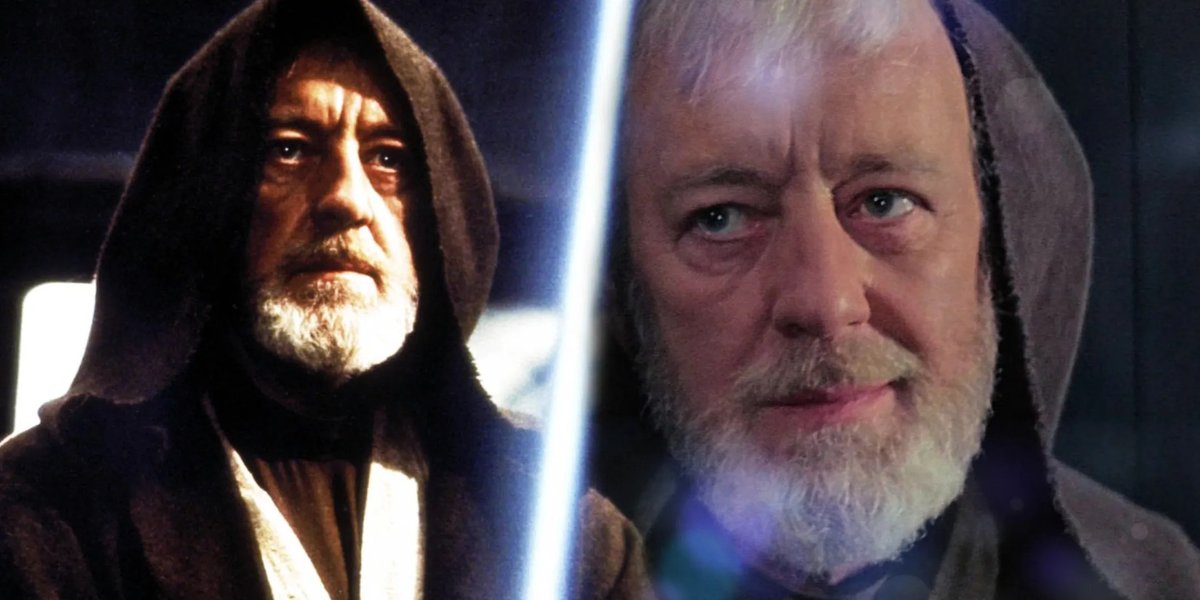
The air aboard the Death Star crackled with an ominous energy. A grizzled Jedi Master, having watched over a desert planet for nearly two decades, stood face-to-face with the embodiment of his greatest failure. It was in this pivotal, charged moment that The Canonical Account of Obi-Wan Kenobi's Death unfolded, not as a defeat, but as a calculated act of selfless sacrifice that forever altered the course of the galaxy.
Obi-Wan Kenobi's final stand is more than just a dramatic lightsaber duel; it’s a masterclass in Jedi philosophy, strategic foresight, and the profound power of letting go. It’s a moment that resonates with every beat of the Star Wars saga, cementing his legacy as one of the most dedicated and wise figures in Jedi history.
At a Glance: Obi-Wan's Final Act
- Who: Jedi Master Obi-Wan Kenobi (portrayed by Alec Guinness).
- Where: Aboard the Imperial Death Star.
- When: Star Wars: A New Hope (Episode IV), during the escape of the Rebel heroes.
- How: Confronting Darth Vader, Obi-Wan lowers his lightsaber and allows Vader to strike him down, vanishing into the Force.
- Why: To create a diversion for Luke Skywalker and the Rebellion leaders to escape, and to transcend physical form, becoming one with the Force to continue guiding Luke.
- Impact: Galvanized Luke Skywalker's commitment to the Jedi path, enabled the Rebellion's survival, and subtly began to stir Anakin Skywalker's dormant conscience within Vader.
The Fateful Encounter on the Death Star: A Duel of Destiny
Imagine being Luke Skywalker, a farm boy from Tatooine, suddenly thrust into a galaxy-spanning war. You’ve just discovered your destiny, your mentor is an old hermit who happens to be a legendary Jedi, and you're now trapped on the Galactic Empire's ultimate weapon, the Death Star. It's amidst this chaos that Obi-Wan Kenobi finds himself cornered by his former apprentice, Darth Vader.
Their confrontation isn't just a simple fight; it's the culmination of years of pain, regret, and the echoes of a friendship shattered on a volcanic world. Obi-Wan, a master of Form III Soresu – a lightsaber combat style focused on defense and energy conservation – faces Vader, who wields immense power and aggression. The duel is brief, weighted not by physical prowess but by emotional baggage and existential stakes. It’s here that you truly see How Obi-Wan Kenobi died with purpose, not just perishing.
The scene builds tension as Obi-Wan and Vader exchange blows, their lightsabers hissing and clashing. But it's Obi-Wan's demeanor that tells the real story. There's a calm resolve in his eyes, a serene acceptance that belies the apparent danger. He’s not fighting to win in the traditional sense; he's orchestrating a final, profound maneuver.
A Choice, Not a Defeat: The Act of Transcendence
As Luke, Leia, Han, and Chewbacca scramble to escape, Obi-Wan locks eyes with Luke for a fleeting moment. It's a look of peace, understanding, and profound love. Then, in an instant that shocked audiences in 1977 and continues to captivate today, Obi-Wan lowers his lightsaber, a blue blade that had served him for decades. Darth Vader, perhaps surprised by the sudden vulnerability, seizes the opportunity, bringing his crimson blade down.
But instead of falling, Obi-Wan's body simply vanishes, his robes collapsing to the floor in an empty pile. This wasn't a defeat; it was a transcendence. Obi-Wan didn't die in the conventional sense; he became one with the Force, retaining his consciousness after death. This ability, a skill he had diligently pursued, was pioneered by his own Master, Qui-Gon Jinn, who first discovered the unique path of becoming one with the Force and communicating from the great beyond. Obi-Wan's vanishing act confirmed his mastery of this skill, demonstrating that true Jedi immortality wasn't about defying death, but understanding and embracing it. For those looking to understand the unique path of becoming one with the Force, Obi-Wan serves as a prime example.
The Strategic Genius Behind the Sacrifice
Beyond the spiritual implications, Obi-Wan's self-sacrifice was a remarkably shrewd strategic move. With Luke and the others cornered, Obi-Wan knew he was both a target and a potential hindrance. By allowing Vader to strike him down, he created an instant, visceral diversion. Vader, momentarily confused by Obi-Wan's vanishing, paused. The stormtroopers, likewise bewildered, took a moment to process the impossible event. This precious window of confusion allowed Luke, Princess Leia, Han Solo, and Chewbacca to make their final escape from the Death Star, carrying with them vital plans and the hope of the Rebellion.
His death wasn't an act of desperation but a calculated gamble, prioritizing the greater good of the galaxy over his own continued physical existence. It demonstrated the Jedi principle that personal survival is secondary to the needs of the many.
Igniting the Spark: Obi-Wan's Death and Luke's Journey
The impact of Obi-Wan's death on Luke Skywalker was immediate and profound. Witnessing his mentor's demise, particularly in such a mystifying fashion, ignited a deeper determination within the young farm boy. It solidified his commitment to the Rebellion and, more importantly, to his burgeoning Jedi path. The death of his master became a catalyst, driving Luke to embrace his destiny with a newfound urgency.
But Obi-Wan's guidance didn't end there. In a truly groundbreaking narrative turn, Obi-Wan continued to guide Luke as a Force ghost. From urging "Use the Force, Luke" during the Battle of Yavin, which led to the destruction of the first Death Star, to directing him to Dagobah to seek out Master Yoda, Obi-Wan's spiritual presence became an invaluable resource. This ongoing mentorship, even from beyond the grave, highlights the phenomenon of Force ghosts as a powerful tool for guidance and wisdom in the Star Wars universe. He symbolized the transition from the old Jedi guard to a new generation, with Luke at its forefront.
Echoes in the Dark: Vader's Unsettling Confrontation
While Obi-Wan's death was a triumph for the light, it also planted subtle, insidious seeds of conflict within Darth Vader. As Obi-Wan vanished, Vader uttered a chilling, yet telling, line: "You can't win, Darth. If you strike me down, I shall become more powerful than you can possibly imagine." For Vader, the sudden disappearance of his former master, combined with the taunting words, must have been profoundly unsettling. It defied the logic of the dark side, which preaches absolute annihilation.
This moment subtly reconnected Vader to his past as Anakin Skywalker, forcing him to confront the ghost of his past, the Jedi he once was. This interaction, though seemingly insignificant at the time, was one of many small prods that would ultimately contribute to Anakin Skywalker's complex journey to redemption decades later. The confrontation wasn't just physical; it was a battle for the soul that continued long after Obi-Wan's body had vanished.
The Deeper Meaning: Jedi Principles and the Greater Good
Obi-Wan Kenobi's sacrifice underscores several core Jedi principles. It exemplifies the selfless nature of the Jedi Order, where individual lives are often subordinate to the well-being of the galaxy. His choice demonstrated an unwavering commitment to the light and an understanding of the interconnectedness of all living things through the Force.
Furthermore, it highlighted the evolution of Jedi wisdom. His mastery of Form III Soresu, known for its extreme defensive capabilities, was ultimately used not to protect his own life, but to transcend it for a higher purpose. This defensive mindset, which he taught Anakin, ultimately became the mechanism for his sacrifice. Understanding the defensive principles of Form III Soresu helps illuminate how Obi-Wan's lifetime of training culminated in this final, strategic surrender.
His actions served as a powerful lesson for Luke, demonstrating that true strength isn't always found in physical combat, but in wisdom, foresight, and the courage to make the ultimate sacrifice. He was willing to let go of his physical self to become a more potent force for good.
Beyond the Blade: Obi-Wan's Enduring Legacy
Obi-Wan Kenobi's death wasn't an ending; it was a profound transformation that propelled the narrative forward. He transitioned from a physical mentor to a spiritual guide, becoming a beacon of hope and wisdom that transcended the limitations of the mortal plane. His legacy as a wise, selfless protector and guide continued to influence not just Luke, but the entire Star Wars saga.
He was a bridge between the old Jedi Order and the burgeoning new one, a testament to resilience and unwavering faith in the light. His journey, from Padawan under Qui-Gon Jinn to a Force ghost guiding the galaxy's new hope, is a cornerstone of the Star Wars mythos. The teachings and innovations of his own master, the legacy of Qui-Gon Jinn, were truly fulfilled through Obi-Wan's ultimate sacrifice and transcendence.
Common Questions About Obi-Wan's Final Moments
It's natural to have questions about such a pivotal and enigmatic moment. Here are some common clarifications:
- Was Obi-Wan defeated? No, not in the traditional sense. He intentionally allowed Vader to strike him down as a strategic maneuver and a means to become one with the Force. He chose his moment.
- Why didn't he fight to win? Obi-Wan understood that a physical victory against Vader in that moment would likely not have achieved the greater objective of getting the Rebel heroes to safety. His foresight, a hallmark of powerful Jedi, showed him a different path to victory.
- Could he have beaten Vader? While Obi-Wan was a formidable duelist, Vader, empowered by the dark side and cybernetics, was incredibly powerful. More importantly, Obi-Wan was older and had spent two decades out of active combat. His goal wasn't a duel to the death, but a path to transcendence.
- How did he vanish? This ability, known as becoming one with the Force, was a rare skill pioneered by Qui-Gon Jinn and mastered by Obi-Wan and Yoda. It allowed their consciousness to persist after physical death, communicating through the Force.
The Unfolding Impact: Why Obi-Wan's Sacrifice Still Resonates
The Canonical Account of Obi-Wan Kenobi's Death is a masterstroke in storytelling, embodying core themes of sacrifice, mentorship, and the enduring power of hope. It reminds us that sometimes, the greatest strength lies not in clinging to life, but in knowing when and how to let go for a purpose greater than oneself.
His final act cemented his place not just as a historical figure in the galaxy, but as a timeless symbol of what it truly means to be a Jedi. It challenges viewers to consider the deeper meanings of victory and defeat, and to understand that even in moments of apparent loss, profound gains can be made. Obi-Wan Kenobi didn't just die; he transcended, ensuring his presence would continue to shape the destiny of the galaxy far beyond his mortal coil. His sacrifice remains a foundational moment, continuously inspiring new generations to explore the nuanced wisdom of the Force and the unwavering commitment required to defend peace and justice.