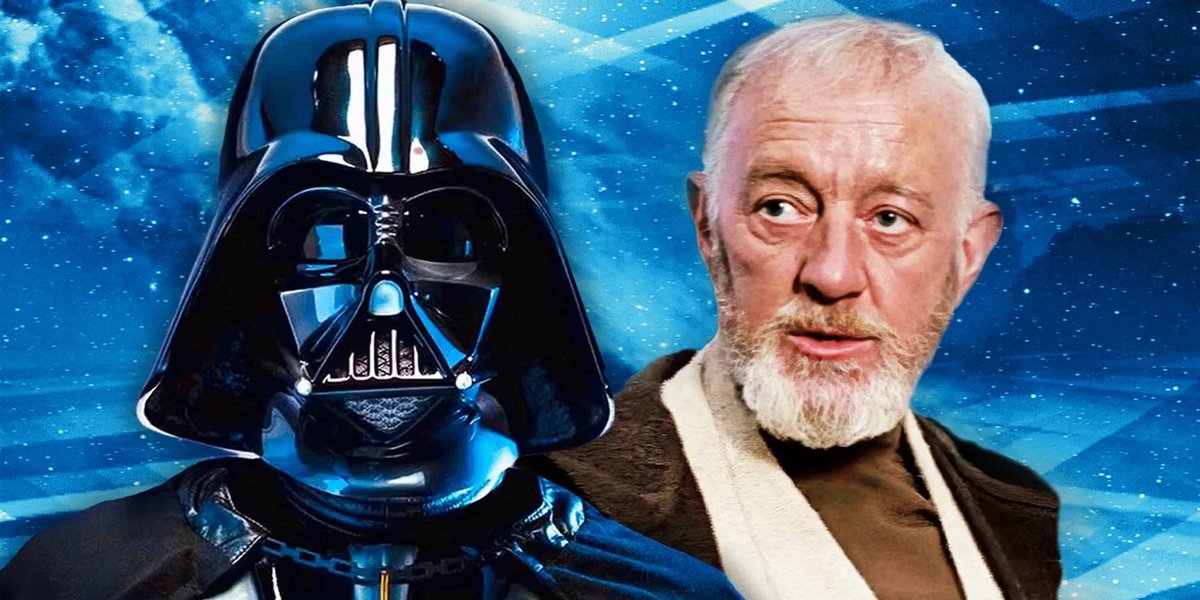
When Obi-Wan Kenobi faded into the Force during his fateful duel with Darth Vader in Star Wars: A New Hope, it wasn't just a pivotal moment for Luke Skywalker. It was a cinematic earthquake that continues to generate passionate fan reactions and critical reception of Obi-Wan's death scene decades later. More than just a character demise, it became a cornerstone of the Star Wars saga, shaping how we understood heroism, sacrifice, and the very nature of life and death in a galaxy far, far away.
This wasn't merely the end of a wise old hermit; it was a narrative choice that ignited immediate discussion, fueled philosophical debates, and fundamentally altered the trajectory of one of film history's most beloved franchises. From initial confusion to eventual reverence, the vanishing act of Ben Kenobi remains a touchstone for critics and fans alike, continuously re-evaluated through the lens of new Star Wars stories and evolving cinematic tastes.
At a Glance: What You’ll Discover
- The Iconic Moment: A detailed look at Obi-Wan's death as depicted in A New Hope and its immediate impact.
- Early Fan Reactions: How audiences first grappled with the unexpected vanishing act.
- Critical Interpretations: How film critics and scholars initially understood its narrative and thematic weight.
- The "Gruesome" Alternate Ending: Unearthing George Lucas's original, darker vision for Kenobi's demise.
- Why It Endures: Deconstructing the scene's lasting power and its role in defining the Force Ghost concept.
- Modern Re-evaluation: How subsequent Star Wars content has reshaped our understanding of this sacrifice.
The Vanishing Act: Revisiting Obi-Wan's Iconic Demise
Imagine sitting in a movie theater in 1977. You've just been introduced to the grizzled old Ben Kenobi, a mysterious mentor who hands a young farm boy a strange, glowing sword and speaks of a mystical energy field. He promises to teach Luke the ways of the Force. Then, aboard the Death Star, he confronts his former apprentice, now the terrifying Darth Vader. Their lightsaber duel, while visually modest by today's standards, crackles with a palpable tension rooted in their shared, tragic history.
Vader, a menacing silhouette, delivers a seemingly fatal blow. But instead of falling, bleeding, or even collapsing, Obi-Wan vanishes. His cloak drops to the floor, his lightsaber extinguished. Poof. He’s gone, replaced by a disembodied voice guiding Luke to "run." It was a moment of profound shock and wonder, a visual trick that defied conventional cinematic death scenes and instantly deepened the mythology of Star Wars. For anyone wanting to know the mechanics of his final moments, you can always Discover how Obi-Wan died.
This wasn't just a plot device; it was a statement. Obi-Wan didn't die in the traditional sense; he transcended. He became "more powerful than you can possibly imagine," as he later tells Vader. This concept, revolutionary for a mainstream blockbuster, laid the groundwork for the Force Ghost phenomenon that would become a signature element of the Star Wars universe, profoundly influencing its themes of mortality, legacy, and spiritual continuity.
Fan Reactions: A Spectrum of Emotion and Interpretation
The initial wave of fan reactions to Obi-Wan's death was a swirling mix of confusion, sadness, and awe. Many were simply baffled by the visual effect. Where did he go? Was it magic? Had he been vaporized? The suddenness and the ethereal nature of his disappearance left audiences — particularly younger ones — piecing together the implications.
- Confusion and Disbelief: For many, the idea of a character simply disappearing upon death was unprecedented in mainstream cinema. It sparked conversations about what it meant to die in the Star Wars universe.
- Sadness and Loss: Despite the mystery, the emotional weight of a beloved mentor sacrificing himself was clear. Audiences felt Luke's despair and the tragic end of a revered figure.
- Awe and Wonder: For others, the "vanishing act" was instantly recognized as something profound. It opened up incredible possibilities for the Force, suggesting a spiritual plane beyond physical existence. This element of wonder was crucial in captivating imaginations and making the Force feel truly mystical.
Over time, as the lore expanded and subsequent films introduced other Force Ghosts like Yoda, the interpretation coalesced: Obi-Wan had achieved a higher state of being. His death wasn't an end, but a transformation, allowing him to continue guiding Luke from beyond the veil. This understanding cemented his sacrifice as not only heroic but also narratively essential and deeply spiritual. It transformed initial bewilderment into widespread appreciation for the genius of the narrative choice.
Critical Reception: Genius or Gimmick?
Early critical reception of Obi-Wan's death was just as varied as the fan response, though generally leaning towards admiration for its narrative audacity. Critics immediately recognized the scene as a crucial turning point, not just for Luke's journey but for the entire mythological landscape George Lucas was crafting.
Film reviewers of the time often highlighted the scene's ability to imbue the Force with a sense of genuine mysticism and consequence. It elevated the stakes beyond simple good versus evil, introducing themes of spiritual transcendence and mentorship that resonated deeply. The unexpected nature of the death, departing from typical cinematic portrayals, was frequently cited as a sign of Star Wars's innovative storytelling.
- Narrative Ingenuity: Critics lauded Lucas for a bold move that simultaneously removed a key mentor figure while keeping his presence alive. This choice propelled Luke into independent action while ensuring Obi-Wan's continued influence.
- Thematic Depth: The sacrifice was seen as a powerful exploration of mentorship, selflessness, and the passing of the torch. It underscored the idea that true power wasn't just physical strength but wisdom and spiritual understanding.
- Mystical World-Building: The disappearance cemented the Force as more than just a power source—it was a spiritual pathway, a continuum of life and consciousness. This expanded the scope of what fantasy films could achieve.
However, some initial critiques, though fewer, did surface, primarily concerning the execution of the duel itself. Before the advent of the prequel trilogy's acrobatic lightsaber choreography, the A New Hope duel between Obi-Wan and Vader was slow and deliberate. A few critics, perhaps expecting more physical action, found the fight underwhelming, which could, for some, detract from the gravitas of Obi-Wan's ultimate sacrifice. Yet, the overwhelming consensus celebrated the scene for its profound impact on the narrative and its lasting cultural significance.
The "Original Vision": A Gruesome Alternate History
What many fans and critics might not realize is that Obi-Wan Kenobi's death was almost far more gruesome. George Lucas's initial vision, as revealed in the novelization of A New Hope (published before the film's release) and even earlier screenplays, paints a much darker picture.
According to these early texts, Vader was not merely supposed to strike Obi-Wan and cause him to vanish. Instead, the novelization vividly describes Vader "lunge[ing] forward, feinting, and then slashing in a deadly downward arc with the saber. It struck home, cutting Kenobi cleanly in half." The screenplay corroborates this, stating, "Vader brings his sword down, cutting old Ben in half." This was intended to be a vertical bisection, a truly brutal and visceral end, reminiscent of what Obi-Wan himself would later do to Darth Maul on Tatooine in The Phantom Menace.
The idea of Kenobi being graphically bisected, even if he was still destined to disappear into the Force, would have fundamentally altered the tone of A New Hope. Such an explicit display of violence might have pushed the film into a darker, more mature rating, potentially alienating younger audiences. It certainly would have made the concept of a Force Ghost much harder to reconcile visually. The current, more ambiguous disappearance allowed for a mystical, almost serene departure, preserving the film's sense of wonder rather than graphic horror. Lucas's decision to pivot from this visceral dismemberment to the elegant fade was a masterful stroke, one that undoubtedly contributed to the scene's iconic status and the lasting, positive fan and critical reception.
Why It Works (And Doesn't For Some): Deconstructing the Impact
The enduring power of Obi-Wan's death lies in its multi-layered impact, skillfully balancing spectacle with profound thematic resonance. Yet, some aspects continue to spark debate.
The Power of Sacrifice: A Choice, Not an Accident
Obi-Wan's death isn't a defeat; it's a deliberate act of sacrifice. He chooses to let Vader strike him down, not because he's weak, but because he understands his role in the larger tapestry of the Force. His words, "If you strike me down, I shall become more powerful than you can possibly imagine," are not a desperate bluff but a statement of spiritual conviction. This makes his demise incredibly powerful, elevating it from a mere character death to a heroic, selfless act that empowers the next generation. It's a fundamental narrative principle: the mentor steps aside so the hero can rise.
The Birth of the Force Ghost: A Revolutionary Concept
Prior to A New Hope, few films, especially in the sci-fi/fantasy genre, had explored death in such a spiritually transcendent way. The Force Ghost concept, born from Obi-Wan's disappearance, was groundbreaking. It allowed beloved characters to retain their wisdom and influence beyond their physical forms, providing a unique blend of loss and enduring presence. This concept has since become integral to Star Wars lore and has been emulated in various forms across other fictional universes. It's a genius solution to both remove a character for plot progression and keep them around for mentorship.
A Symbol of Transition: Handing the Torch to Luke
Obi-Wan's final moments are less about his own end and more about Luke's beginning. By forcing Luke to witness his master's "death," Obi-Wan essentially cuts the tether. Luke must now rely on his own nascent abilities and internal guidance, accelerating his journey toward becoming a Jedi. The cloak falling empty is a visual metaphor for the responsibility now placed squarely on Luke's shoulders, a powerful symbol of the generational transfer of hope.
The "Slow Duel" Debate: Contextualizing 1977 vs. Modern Expectations
For modern audiences accustomed to the hyper-kinetic, acrobatic lightsaber duels of the prequel and sequel eras, the Obi-Wan/Vader confrontation in A New Hope can appear slow, even clunky. This discrepancy sometimes leads to a critical re-evaluation, where some viewers feel the fight itself doesn't live up to the dramatic weight of the moment.
However, it's crucial to remember the context of 1977 filmmaking. Lightsaber choreography was in its infancy. Furthermore, the scene emphasizes the gravitas of two old masters, one enhanced by machine, locked in a philosophical rather than purely physical struggle. It's less about flashy swordplay and more about the culmination of a tragic history, with Obi-Wan's wisdom ultimately triumphing over Vader's brute force and hatred. The slow, deliberate movements often underscore the emotional weight and internal struggle rather than just external combat.
The Legacy Continues: Obi-Wan's Death in a Broader Star Wars Universe
Obi-Wan Kenobi's death isn't a static event; its meaning and impact have continued to evolve with every subsequent Star Wars release. The prequel trilogy, especially Revenge of the Sith and the Obi-Wan Kenobi series, retroactively imbues his sacrifice with even greater tragic weight. We now understand the depth of his bond with Anakin, the pain of their separation, and the profound sadness he carried for decades.
This added context means that his encounter with Vader in A New Hope isn't just a duel between good and evil; it's a confrontation between old friends, a final, heartbreaking encounter between master and fallen apprentice. It reframes his "death" as the ultimate act of letting go—not just of life, but of the hope of redeeming Anakin, choosing instead to become a beacon of hope for Luke.
The Force Ghost concept, pioneered by Obi-Wan, became a vital narrative tool, allowing characters like Yoda and even Anakin Skywalker to offer guidance from the netherworld of the Force. This established a unique spiritual dimension to the Star Wars universe, emphasizing that death is not necessarily an end, but a transformation, and that wisdom and love can transcend physical bounds. The enduring influence of Obi-Wan, both in life and in death, continues to shape the narrative possibilities of Star Wars, proving that his final act was far from a conclusion, but rather a profound beginning.
The Enduring Echo: Why We Still Talk About Ben Kenobi's Last Stand
Decades after its premiere, the discussion around Obi-Wan Kenobi's death scene remains as vibrant as ever. It's a testament to its narrative brilliance, its thematic depth, and its lasting cultural impact. What could have been a simple end for a supporting character became a defining moment for the entire Star Wars saga, cementing the mystical nature of the Force and setting a powerful precedent for self-sacrifice in cinematic storytelling.
Whether you first encountered it as a bewildered child, a critical teenager, or a discerning adult, the vanishing act of Obi-Wan leaves an indelible mark. It represents a pivot point—for Luke, for the Jedi, and for the very concept of heroism. It’s a scene that invites constant re-evaluation, deepening its resonance with every new layer of Star Wars lore that emerges. Ultimately, Obi-Wan's death isn't just a plot point; it's a foundational myth, reminding us that sometimes, to become truly powerful, one must first learn to let go. The debates, the analyses, and the passionate defenses of this iconic moment are not just about a movie scene; they're about the enduring power of storytelling itself.